Why Fantini Mosaici’s Venetian Terrazzo Floor in Milan Is Defining Luxury Design
Fantini Mosaici’s handcrafted Venetian terrazzo flooring for the RCS Group presidency offices in Milan is rapidly becoming one of the most discussed interior architecture projects of 2026. Designed with the Milan studio De.Tales inside the historic Palazzina Feltrinelli on Via Solferino, the project signals the return of terrazzo as one of the defining luxury materials of the decade.
I have spent two decades putting my hands on surfaces. Marble. Oak. Brushed brass. Hand-troweled plaster. And every now and then, on a project that lets me breathe deeper than usual, terrazzo.
So when I heard Fantini Mosaici had laid the floors of the new RCS Group presidency offices at Corriere della Sera itself, I cleared my afternoon and went looking for images.
What I found stopped me.
Why Fantini Mosaici’s Venetian Terrazzo Floor Is Redefining Luxury Offices in Milan
There are floors you walk on. And there are floors that walk with you. Floors that hold a city's century in their grain.
The new presidency offices for RCS Group at Via Solferino 30 — inside the restored Palazzina Feltrinelli — belong firmly to the second category. The handcrafted Venetian terrazzo, conceived by the Milanese studio De.Tales and executed by Fantini Mosaici, is not simply flooring. It is editorial. It is a thesis statement laid in marble chip.
You walk in. You look down. You understand the building before anyone has said a word.
That is design at its most articulate.
The Legacy of Fantini Mosaici
Some firms have a portfolio. Fantini Mosaici has a lineage.
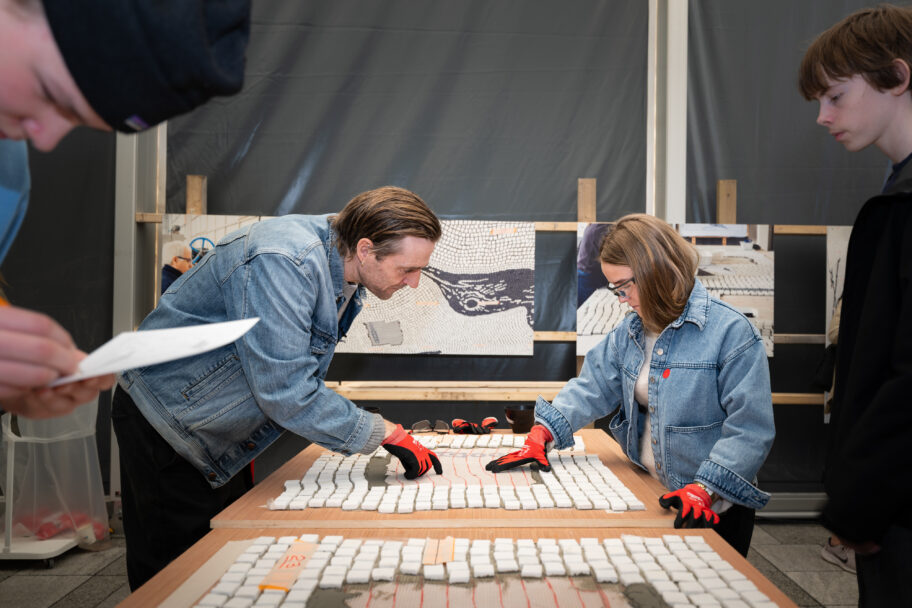
It begins in 1900, when a Milanese artisan named Domenico Fantini decided a floor could be a masterpiece. Four generations later, the family has not moved from that conviction. More than 200 master craftspeople still work the way the old terazzeri once worked — by hand, in stages, with the kind of patience contemporary construction rarely permits.
Their commissions form a map of architectural ambition: luxury maisons, presidential palaces, international landmarks. The floor of the Sheikh Zayed Grand Mosque in Abu Dhabi — the largest mosaic floor in the world, spanning the equivalent of four football pitches — was executed in Fantini’s workshops from a design by Kevin Dean.
Closer to home, Fantini laid the floors of the Galleria Vittorio Emanuele and the Università Cattolica. The bones of Milan are partly their bones too.
Their collaborators include Peter Marino, Rem Koolhaas, Michele De Lucchi and Pierre-Yves Rochon — the kind of names attached to buildings that intend to outlive fashion.
Mies van der Rohe famously said God is in the details. Fantini Mosaici has been quietly making that argument for more than a century.
Why Terrazzo Flooring Is Returning as the Defining Luxury Material of 2026
Every client eventually asks the same question: what exactly is terrazzo?
The answer begins in fifteenth-century Venice.
Mosaic workers were left with marble fragments too beautiful to discard. So they did what craftspeople have always done: they transformed waste into invention. Marble chips were pressed into clay and cement, then ground smooth by hand with stone tools before being polished into a luminous surface. The material became known as terrazzo, from terrazza, meaning terrace, because it first appeared outdoors.
That origin story matters because it explains why terrazzo feels so contemporary today.
The global terrazzo flooring market reached approximately USD 24.81 billion in 2024 and is projected to exceed USD 34 billion by 2034. This is not a passing aesthetic trend. It is a rediscovery of permanence.
Three forces are driving its return.
First, fatigue with uniform minimalism. For years, interiors chased visual silence — beautiful empty rooms that increasingly resembled luxury waiting lounges. Terrazzo resists that flattening. It rewards texture, movement and close attention.
Second, sustainability. Modern terrazzo flooring can contain up to ninety percent recycled material, including marble offcuts and recycled glass. With a lifespan measured in generations rather than decades, it represents one of the rare truly long-term architectural surfaces available today.
Third, terrazzo carries history honestly. Unlike synthetic imitations of age or craft, terrazzo bears the marks of handwork openly. Every aggregate tells you how it was made.
Le Corbusier once said the purpose of architecture is to move us. Terrazzo remains one of the few flooring materials capable of doing exactly that.
2026 Terrazzo Design Trends: Fine Aggregates, Neutral Tones and Architectural Surfaces
In 2025 and into 2026, terrazzo has evolved beyond the playful, oversized compositions that dominated social media a few years ago.
The language is now quieter and more refined.
Designers are moving toward tone-on-tone palettes, fine and medium aggregates, soft neutrals and surfaces that behave architecturally rather than decoratively. The most compelling terrazzo projects today whisper rather than shout.
Terrazzo is also leaving the floor.
We are increasingly seeing it climb walls, wrap countertops and shape furniture pieces. It has become less a flooring choice than a complete material vocabulary.
Which brings us back to Via Solferino.
Inside the Handcrafted Venetian Terrazzo Floor at Corriere della Sera
Now, the floor itself.
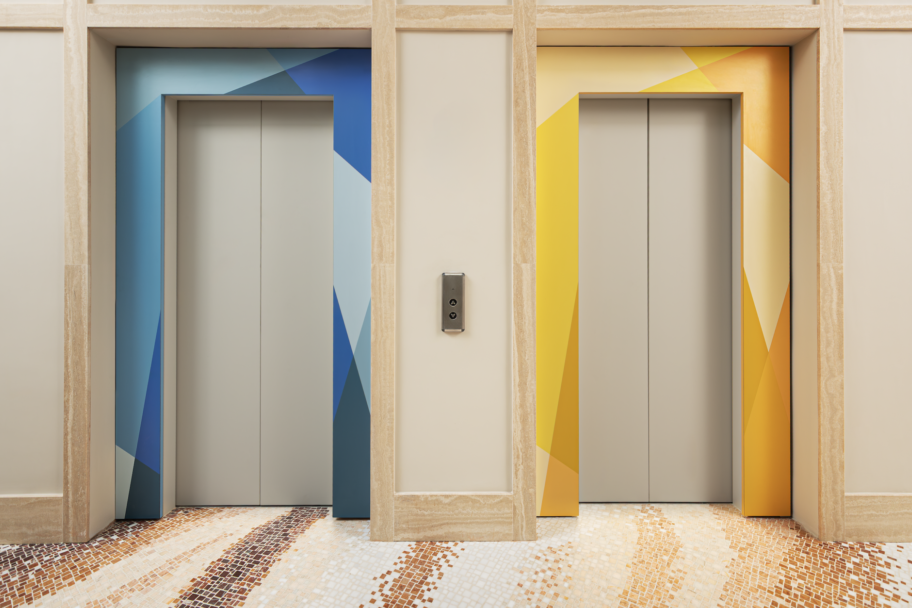
Fantini’s artisans created a handcrafted Venetian terrazzo using three aggregates: Orinoco Grey for its cool silver warmth, Light Bottoncino for its creamy limestone softness, and Occiolino, an irregular small-chip marble whose imperfections prevent the surface from ever feeling industrial.
Together they create something photography struggles to capture fully. Quiet from a distance. Extraordinary underfoot.
The terrazzo flooring extends continuously through the stairs and corridors across both levels, binding the project together with uninterrupted material logic. What appears effortless is, in reality, the product of weeks of templating, pouring, curing, grinding and polishing by hand.
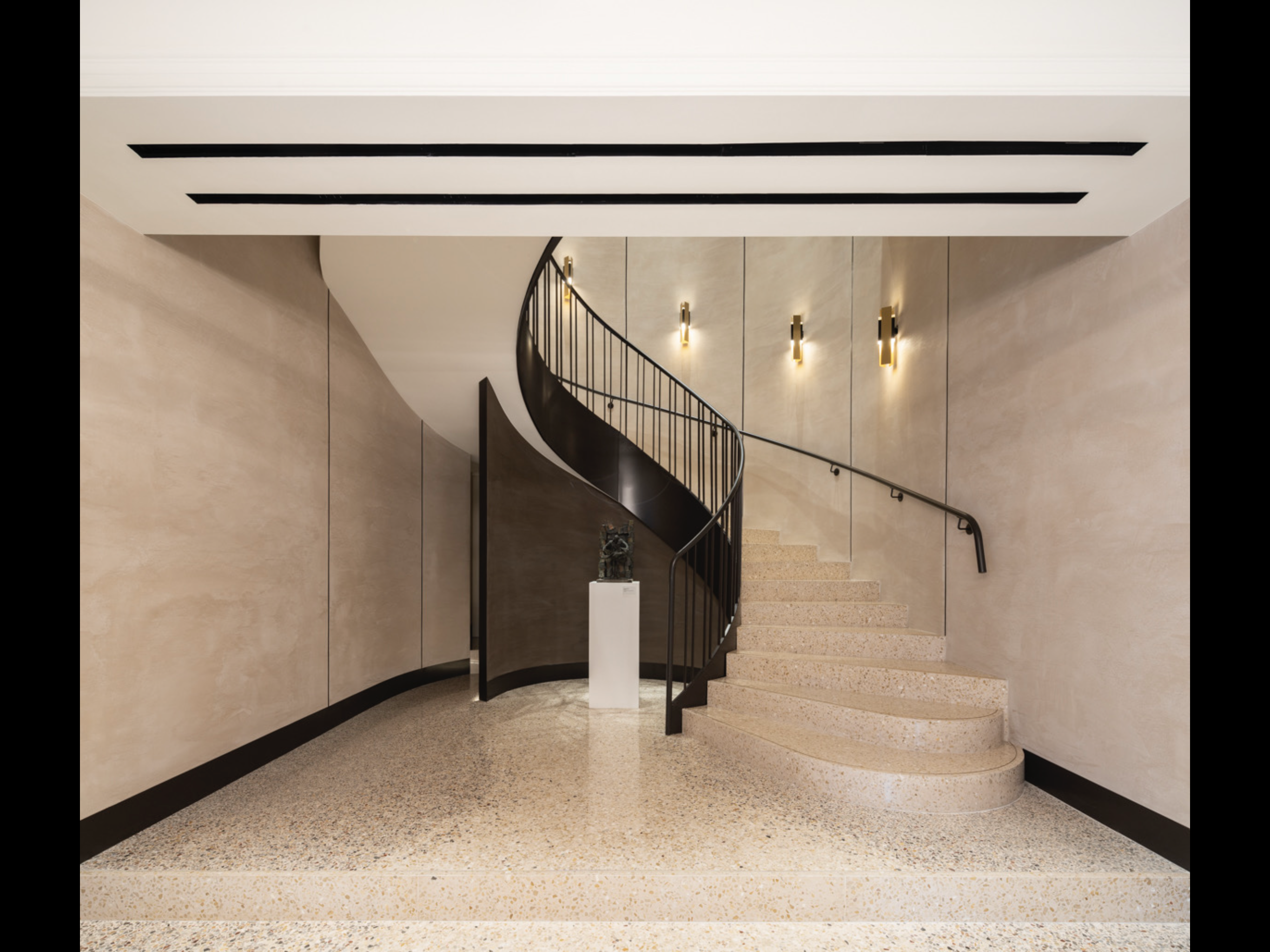
The moment that remains impossible to forget, however, is the helical staircase.
I have seen staircases clad in terrazzo before. I have rarely seen one dissolved into terrazzo.
At Via Solferino, the material rises with the architecture itself. The conventional separation between floor and stair disappears entirely. The terrazzo no longer behaves as a surface application. It becomes structure, movement and form all at once.
This is terrazzo doing the work only terrazzo can do.
Daniel Libeskind once observed that meaningful architecture does not parody history — it articulates it. The staircase at Via Solferino articulates a five-hundred-year-old Venetian technique in a distinctly contemporary language without strain or nostalgia.
Why Handcrafted Terrazzo Still Matters in the Age of AI Design
There is one final detail that matters more than the aggregate palette or the technical execution.
Fantini Mosaici was born in Milan in 1900. Corriere della Sera established itself on Via Solferino in the nineteenth century. Palazzo Beltrami and the Palazzina Feltrinelli both emerged in 1904.
These institutions grew up together under the same northern Italian light.
To commission Fantini for this building was not vendor selection. It was a homecoming.
In a year when so many interiors are generated, rendered and manufactured at astonishing speed, the floors of the new RCS presidency offices argue for something slower and far more radical: the value of the human hand.
They ask us to bend down. To look closely. To notice the accident of a marble fragment landing exactly where it did.
They remind us that beauty and function were never truly separate disciplines.
The answer, polished and speckled beneath the clean Milan light, has been waiting exactly where it always was.
Underfoot.