Upholding: Stone, Structure and the Architecture of Memory
Fantini Mosaici translates Matias Faldbakken’s vision for Norway’s National 22 July Memorial into a monumental mosaic shaped by craftsmanship and collective participation.
At Johan Nygaardsvolds plass, within Oslo’s new Government Quarter, a monumental steel structure holds an image of unexpected delicacy: a common greenshank standing among reeds and branches, its slender form reflected in water.
This tension between weight and vulnerability lies at the heart of Upholding, Norway’s National Memorial for 22 July. Conceived by Norwegian artist and writer Matias Faldbakken, the work commemorates the 77 people killed in the terrorist attacks of 22 July 2011 while extending its meaning beyond remembrance. It asks how a democratic society carries the weight of its history—and how memory may be upheld collectively, across generations.
Inaugurated on 19 July 2026, the memorial brings together public art, architecture, industrial heritage and mosaic craftsmanship within a single civic structure.
An Image Held by Architecture
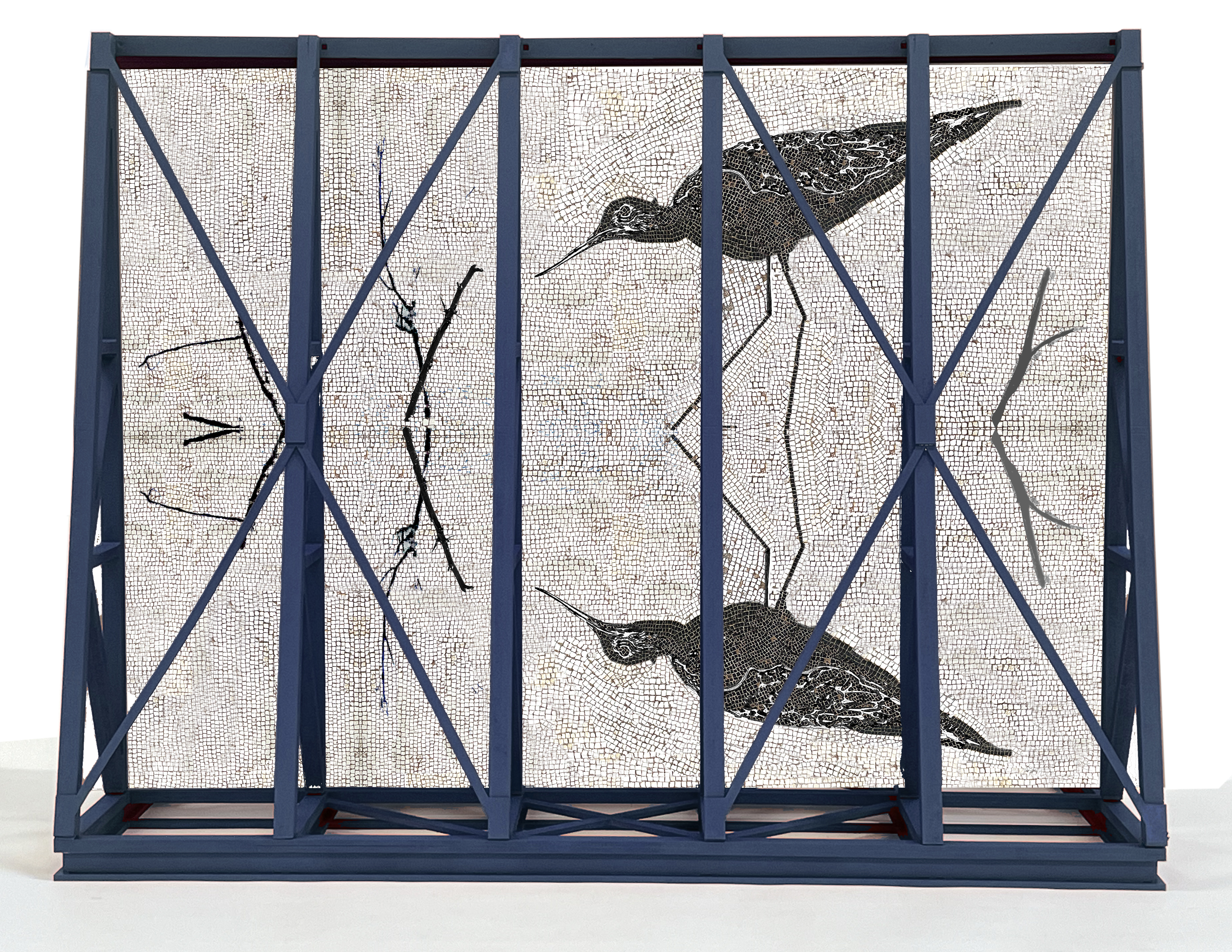
Upholding is composed of two elements that appear, at first, to belong to different visual languages.The first is a restored industrial steel rig, originally associated with the former Y-block in Oslo’s Government Quarter. The structure once supported The Fishermen, the monumental sandblasted work based on a design by Pablo Picasso and executed by Norwegian artist Carl Nesjar.
The second is Faldbakken’s mosaic: a landscape image derived from the natural environment of Utøya and Tyrifjorden. At its centre, the small bird appears almost weightless against the monumental geometry surrounding it.
Rather than concealing the support system, Upholding makes it visible. Steel frames stone; structure becomes part of the image. The memorial’s physical construction therefore reflects its conceptual proposition: memory is not passive. It must be held, protected and continually sustained.
The resulting work is deliberately insistent in scale, yet attentive in its imagery. Its industrial presence is counterbalanced by water, vegetation and fragile life. Seen from across the square, it reads as a monumental public image. Approached more closely, it dissolves into thousands of individual fragments.
Translating an Image into Stone
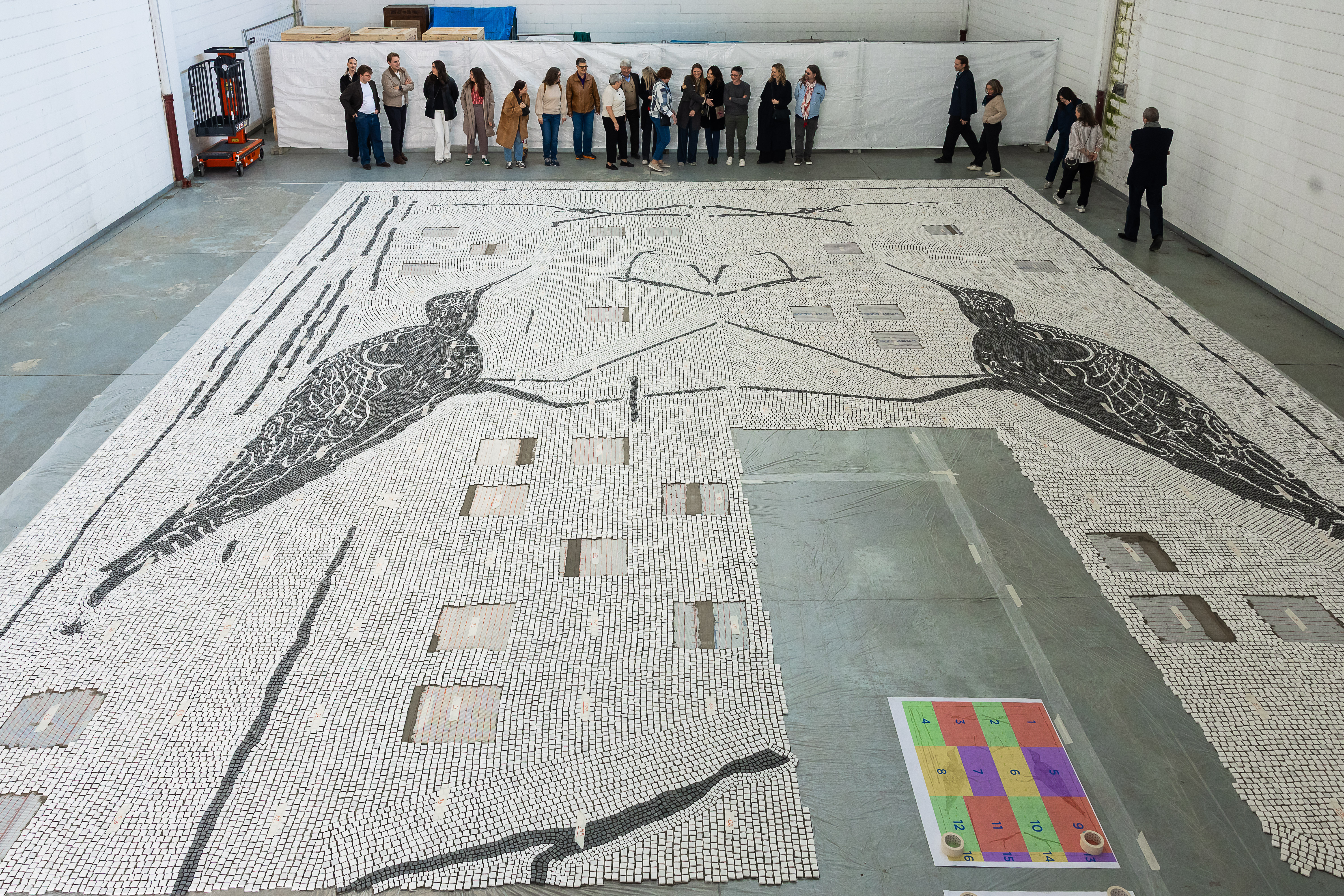
The transformation of Faldbakken’s original image into mosaic required more than enlargement. It demanded a material translation.
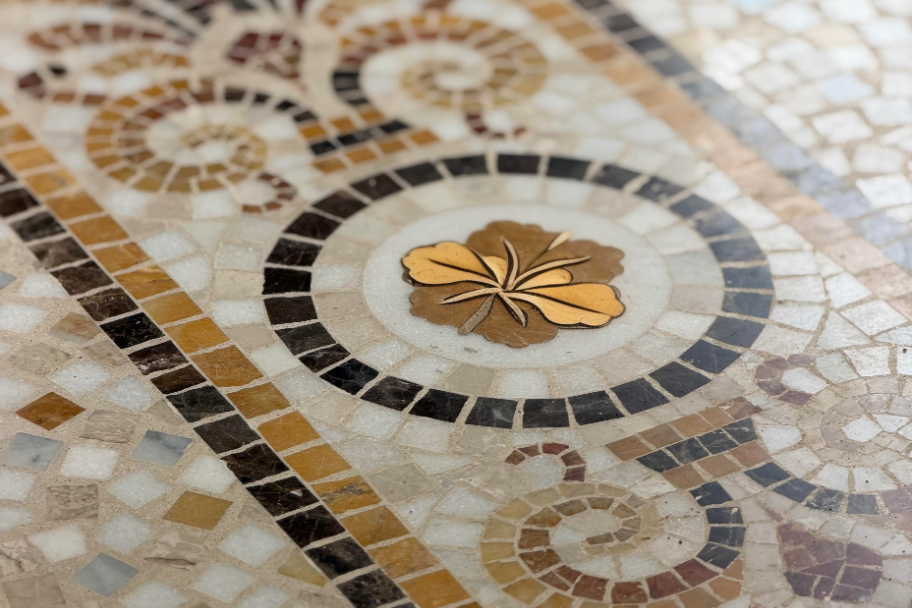
Working in close dialogue with the artist, Fantini Mosaici developed the image through approximately 300,000 pieces of natural stone. Colour, tonal variation, scale and rhythm were calibrated so that the composition would retain its visual clarity at an urban distance while revealing its material complexity at close range.
Each tessera performs a dual role. Individually, it possesses weight, texture and irregularity. Collectively, the pieces produce reflection, vegetation, movement and atmosphere.
This relationship between fragment and whole is fundamental to mosaic, but within Upholding it acquires a wider resonance. The image is formed through the careful placement of distinct elements, each contributing to a larger and enduring construction.
Under the direction of Mosaic Workshop Director Demetrio Piccoli, Fantini Mosaici’s artisans developed and assembled the work with the precision required by both the image and its architectural setting. The process combined traditional knowledge of stone with the technical demands of a contemporary public artwork designed to withstand time, climate and continuous civic encounter.
A Workshop Open to the City
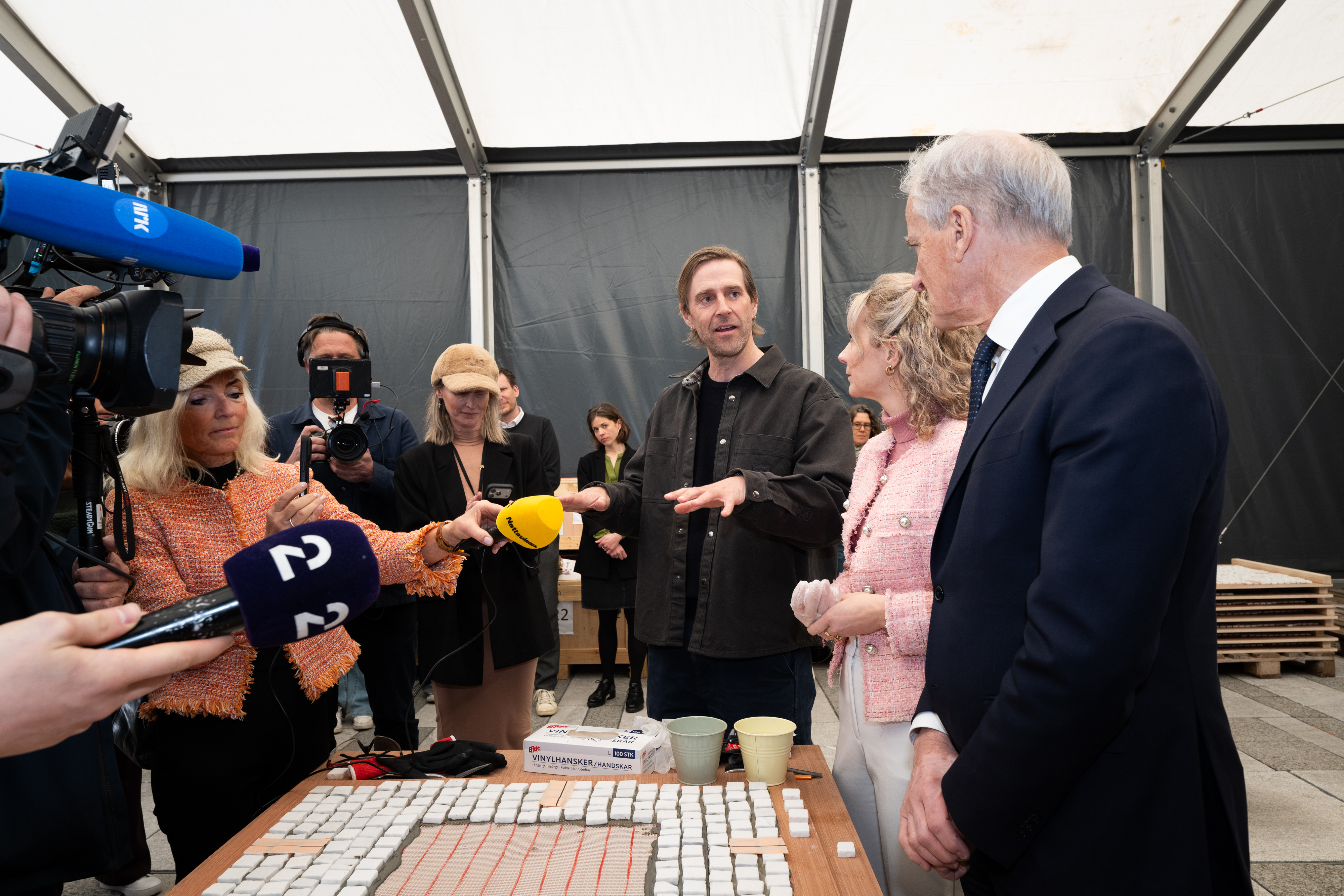
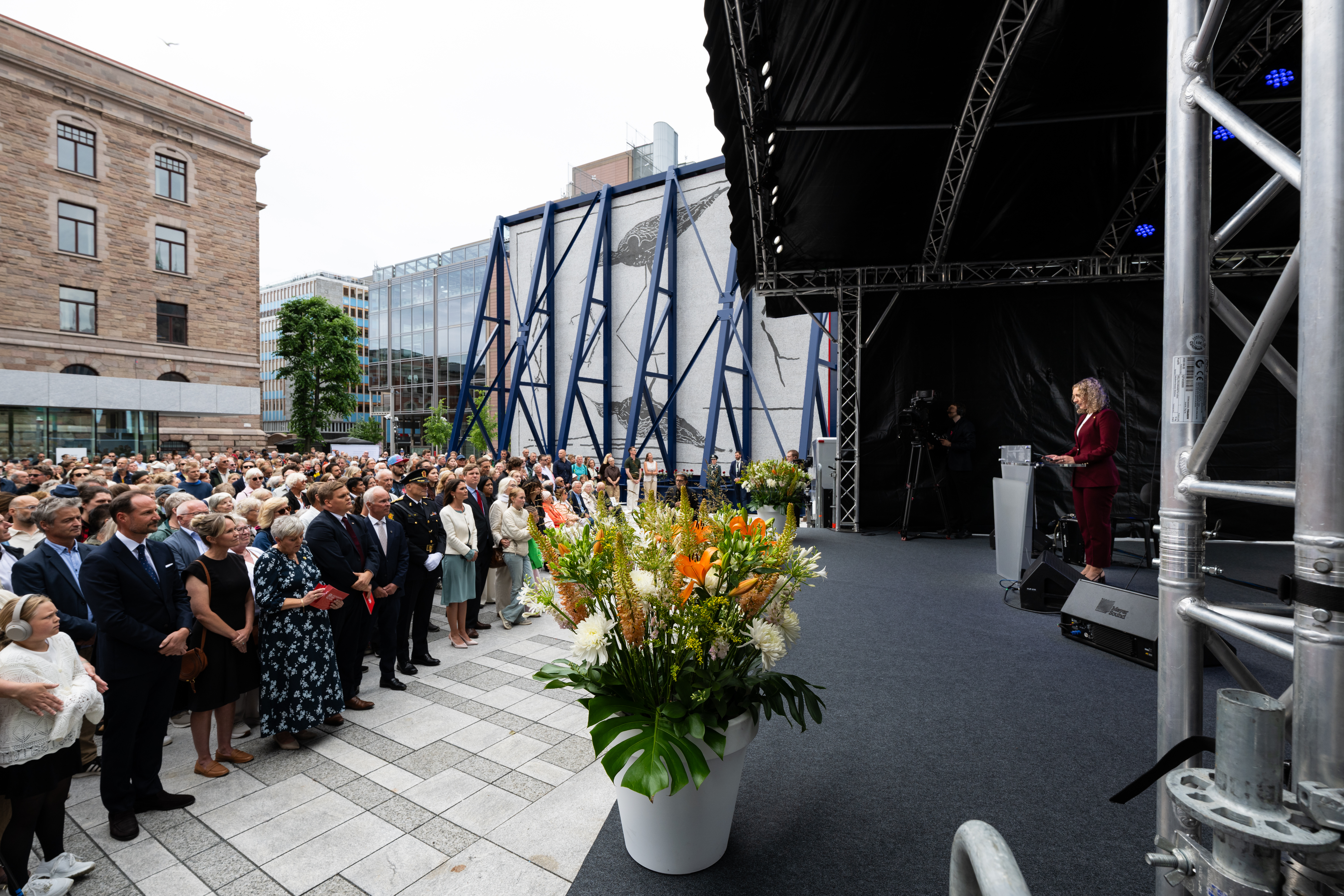
The final phase of the mosaic was completed not behind closed doors, but through a participatory workshop held at the memorial site in Oslo.
Over three weeks, approximately 2,000 people—including survivors, bereaved families, young participants and members of the public—worked alongside Faldbakken and professional mosaic artisans to lay the final 7,000 stones.
This act of participation became an essential part of the memorial’s architecture and meaning. The community was not invited merely to observe the making of the work, but to enter the process physically: selecting, positioning and fixing stone into place.
During the workshop, Norwegian Prime Minister Jonas Gahr Støre visited the site, where he met Faldbakken and the project team and observed the mosaic-making process at close range. His visit acknowledged both the national significance of the memorial and the collective labour through which its final surface was formed.
The workshop transformed construction into a civic ritual. Individual gestures became part of a permanent public work, embedding participation directly within the material fabric of the memorial.
Craftsmanship in the Service of Memory
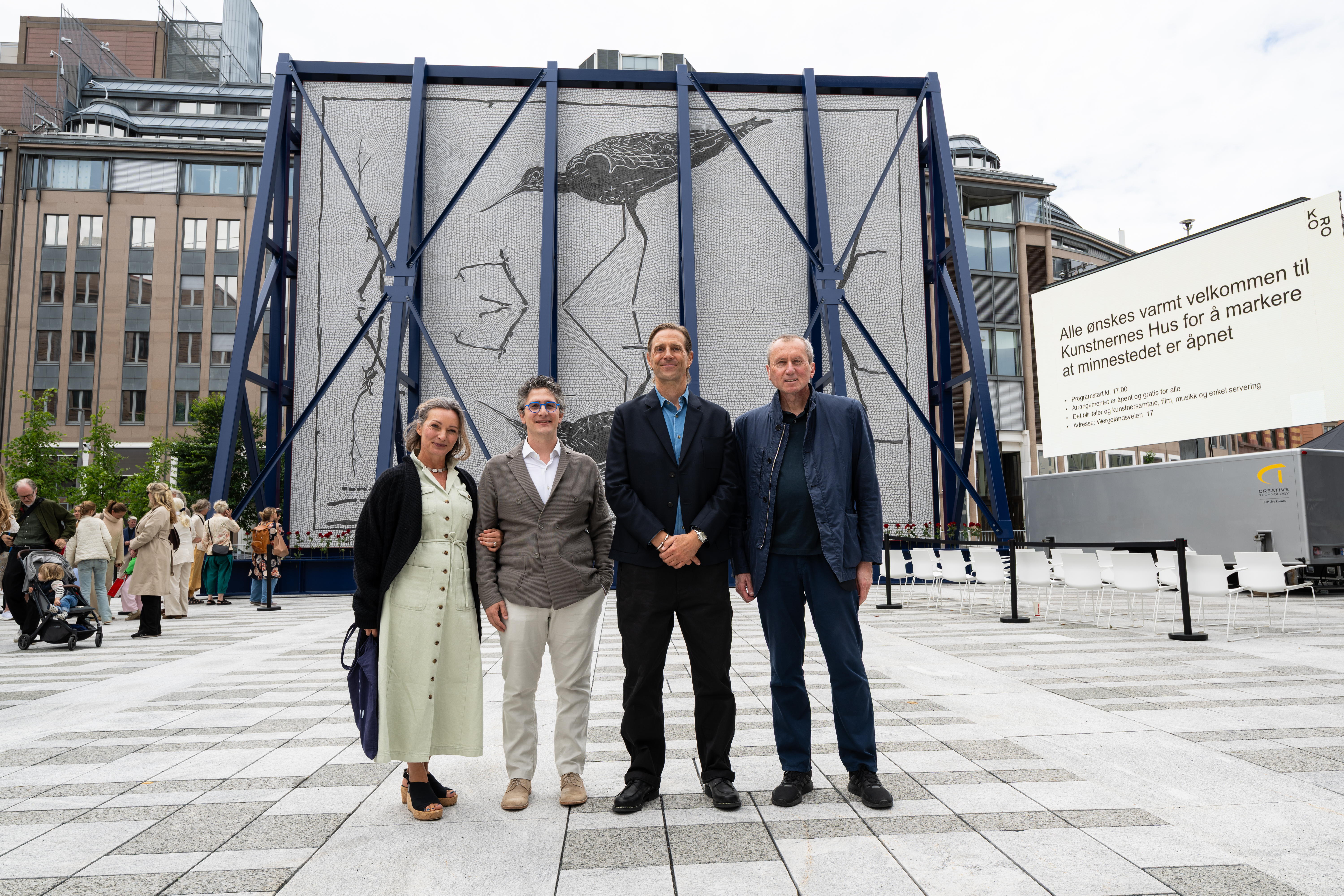
For Enrico Fantin, Upholding represented far more than a technical commission.
His personal involvement and leadership accompanied Fantini Mosaici through a project carrying exceptional artistic, civic and human responsibility. Every material decision had to respond not only to the artist’s vision and the demands of the site, but also to the significance the completed work would hold for survivors, families and the wider Norwegian public.
Within Fantini Mosaici’s 125-year history, the project stands as an expression of the company’s most enduring values: respect for artistic authorship, mastery of material and the belief that craftsmanship can serve culture and collective memory.
The memorial will also remain part of Enrico Fantin’s personal legacy—a work in which the company’s knowledge of stone was placed at the service of remembrance and future generations.
Project: Upholding — Norway’s National Memorial for 22 July
Artist: Matias Faldbakken
Mosaic fabrication and craftsmanship: Fantini Mosaici
Mosaic Workshop Director: Demetrio Piccoli
Commissioner: Ministry of Digitalisation and Public Governance
Public-art producer: KORO — Public Art Norway
Project partner: Statsbygg
Location: Johan Nygaardsvolds plass, Oslo, Norway
Inaugurated: 19 July 2026
KORO’s film offers a closer look at the making of Upholding and the people behind it: https://vimeo.com/1215203876